Why Do We Feel More Tired as We Age—and Can Red Light Help? | VioShield™
A practical look at aging, cellular energy, and the emerging science of photobiomodulation
This article is for general educational and wellness information only. It is not intended to diagnose, treat, cure, or prevent any disease.
More than a decade ago, my friend Bill told me, ‘The main problem with getting older is that I feel as though I have no energy left.’ I was in my fifties then and too busy to give his comment much thought. Now that I am getting older myself, his words often come back to me.
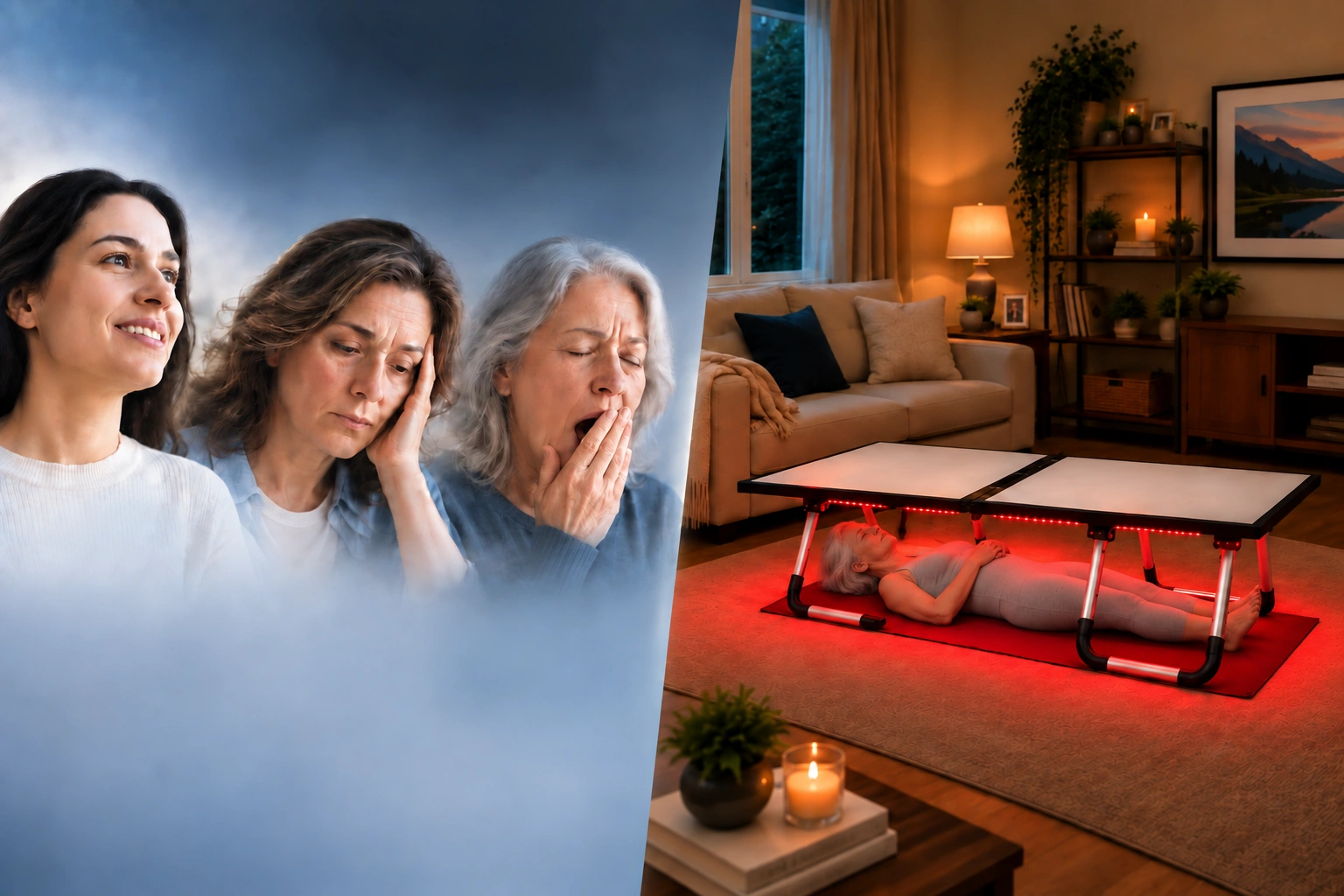
Many people notice that everyday activities require more effort as they age. But persistent fatigue should not automatically be dismissed as ‘just getting older.’ Poor sleep, inactivity, stress, dehydration, inadequate nutrition, medication effects, anemia, thyroid disorders, heart or lung conditions, depression, and other health issues can all contribute. New, severe, or unexplained fatigue deserves a conversation with a healthcare professional.
Why Aging Can Affect Cellular Energy
One area of aging research focuses on mitochondria—the structures inside most cells that help convert nutrients and oxygen into adenosine triphosphate (ATP), the cell’s usable energy currency. With age, mitochondrial function can become less efficient. Changes in muscle mass, circulation, inflammation, sleep, and activity can also influence how energetic a person feels.
This does not mean that all age-related fatigue is simply an ‘ATP shortage.’ Human fatigue is complex, and no single cellular mechanism explains every case. Still, mitochondrial function is one scientifically plausible part of the picture—and one reason researchers are studying photobiomodulation.
What Is Photobiomodulation?
Photobiomodulation, often called red light therapy, uses controlled doses of red or near-infrared light. Laboratory research suggests that certain wavelengths can interact with light-sensitive cellular processes, including mitochondrial signaling. Cytochrome c oxidase, an enzyme involved in cellular respiration, is often proposed as one important light-absorbing target.
Researchers have proposed several connected effects: temporary changes in mitochondrial membrane potential, nitric-oxide signaling, ATP production, blood flow, and redox signaling. These are active areas of research, not a simple on/off ‘recharging’ of old cells. Dose, wavelength, treatment area, timing, and the condition of the tissue all matter; more light is not necessarily better.
What Does the Human Evidence Show?
The most accurate answer is: promising in some applications, but not yet conclusive as a general solution for age-related fatigue. Human studies have examined several different outcomes, including muscle performance, exercise recovery, skin appearance, circulation, pain, and cognitive function. However, these studies do not all use the same wavelengths, light intensities, treatment times, or application methods. That makes it difficult to compare results or define one ideal protocol.
It is also important to distinguish between a measurable biological response and a noticeable change in everyday energy. A study may report a change in ATP-related signaling, blood flow, muscle fatigue, or a laboratory measurement without showing that participants felt less generally tired throughout the day. At present, relatively few clinical trials have studied generalized age-related fatigue as their primary outcome.
Muscle performance and recovery. This is one of the more extensively studied areas of photobiomodulation. Some controlled trials and systematic reviews suggest that applying red or near-infrared light to working muscles before or after exercise may improve selected measures of performance, reduce perceived muscle fatigue or soreness, and support recovery. These findings are relevant to healthy aging because maintaining muscle function and regular physical activity is closely connected with independence and quality of life. Even so, results vary considerably, and studies specifically involving older adults remain limited.
Brain function and mental stamina. The brain consumes a large share of the body’s energy, so researchers are investigating whether light delivered to the head may influence cerebral blood flow, mitochondrial signaling, or neural activity. Early human studies of transcranial photobiomodulation have reported changes in brain activity and selected measures of attention, memory, or executive function. These results are intriguing, but the studies are generally small and use specialized devices and protocols. Shining light on the body is not equivalent to a transcranial application, so these findings should not be generalized to every red light product.
Skin and local tissue response. Human research has also found that appropriately dosed red light can influence skin-related outcomes, including collagen-associated changes, skin texture, and visible signs of aging. Other studies have explored localized circulation, discomfort, and tissue recovery. This evidence supports the idea that photobiomodulation can produce biological effects in illuminated tissue, but a local skin or muscle response does not prove a whole-body increase in energy. If your primary goal is to enhance your daily cosmetic routines and support a healthy-looking complexion, explore our specialized VioShield™ Face & Body options.
Fatigue-related conditions. Photobiomodulation is also being studied in conditions that can include fatigue, pain, or reduced quality of life. That research should not be interpreted as proof that red light treats fibromyalgia, ME/CFS, or unexplained fatigue. These conditions require appropriate medical evaluation and individualized care.
The larger picture. Taken together, current human evidence suggests that photobiomodulation may support certain aspects of muscle function, recovery, skin wellness, and possibly brain function under specific conditions. It does not yet demonstrate that red light reverses mitochondrial aging or reliably restores overall energy in healthy older adults. Larger, longer, well-controlled trials using standardized protocols are still needed.
So, Can Red Light Help You Feel More Energetic?
Possibly—but expectations should remain realistic. Red light may support local biological processes and may complement movement, exercise, rest, and recovery for some people. Current evidence does not establish it as a treatment for generalized fatigue, nor can it make a 70-year-old feel 18 again.
Think of red light as one possible piece of a broader wellness routine, not a substitute for sleep, nutrition, hydration, oxygen, physical activity, or medical care. Light can provide a biological input; the body still needs the fundamental building blocks required to respond.
A New Approach to Red Light Wellness
For people who choose to include red light as part of their wellness routine, convenience and ease of use can be just as important as the light itself.
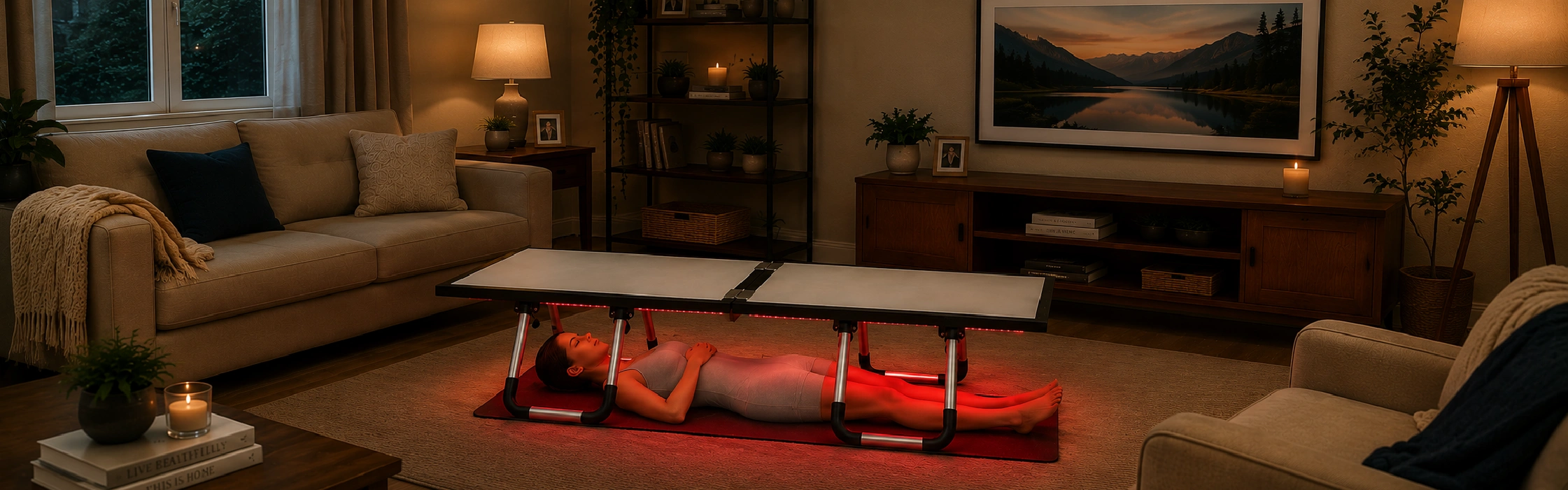
Most red light products fall into familiar categories: wall-mounted panels, enclosed pods, or flexible pads. VioShield™ takes a different approach. Our foldable, modular platform is designed around the way people naturally rest and unwind. It provides broad light coverage while remaining lightweight, portable, and easy to position over a bed or relaxation area.
Built in Colorado, USA, the 2 × 3 ft foldable platform weighs approximately 12 lb. Two modules can be combined to create a 2 × 6 ft full-body platform weighing approximately 24 lb. The elevated, zero-contact design allows users to relax beneath the light without strapping on or holding a device.
Unlike many red light devices with varying configurations, the VioShield™ Red Light Wellness Platform combines 660 nm deep red and 850 nm near-infrared light in a continuous, non-sequential format. The broad illumination area is designed for convenient full-body light wellness, relaxation, and everyday physical comfort.
Learn more about the VioShield™ Red Light Wellness Platform: https://vioshieldcare.com/red-light-wellness.
Selected Research
- Couturaud V, et al. Reverse skin aging signs by red light photobiomodulation. Skin Research and Technology. 2023;29(7):e13391.
- Salehpour F, et al. Efficacy of Photobiomodulation Therapy in Older Adults: A Systematic Review. Biomedicines. 2024;12(7):1409.
- Dole M, et al. A systematic review of the effects of transcranial photobiomodulation on brain activity in humans. Reviews in the Neurosciences. 2023;34(6):671–693.
- Hamblin MR. Mechanisms and Mitochondrial Redox Signaling in Photobiomodulation. Photochemistry and Photobiology. 2018;94(2):199–212.