
When Pain Relief Devices Cause More Pain: The Overlooked Problem of Product Ergonomics | VioShield™
Why wellness technology should adapt to people—not force people to adapt to technology
This article is for general educational and wellness information only. It is not intended to diagnose, treat, cure, or prevent any disease.
The Hidden Problem in Pain Management Devices
Imagine someone suffering from arthritis in their hands. Their fingers are stiff, swollen, and painful. Simple everyday activities—buttoning a shirt, opening a jar, or gripping an object—can become difficult.
Now imagine asking that same person to pull on a tight light therapy glove, fasten a Velcro strap, or manipulate a small buckle.
Or consider someone experiencing knee pain. Bending down to wrap a therapy pad around an already painful joint may be the very movement they are trying to avoid.
Why should someone have to experience additional discomfort just to use a device intended to provide relief?
This is an often-overlooked problem in the rapidly expanding home wellness industry.
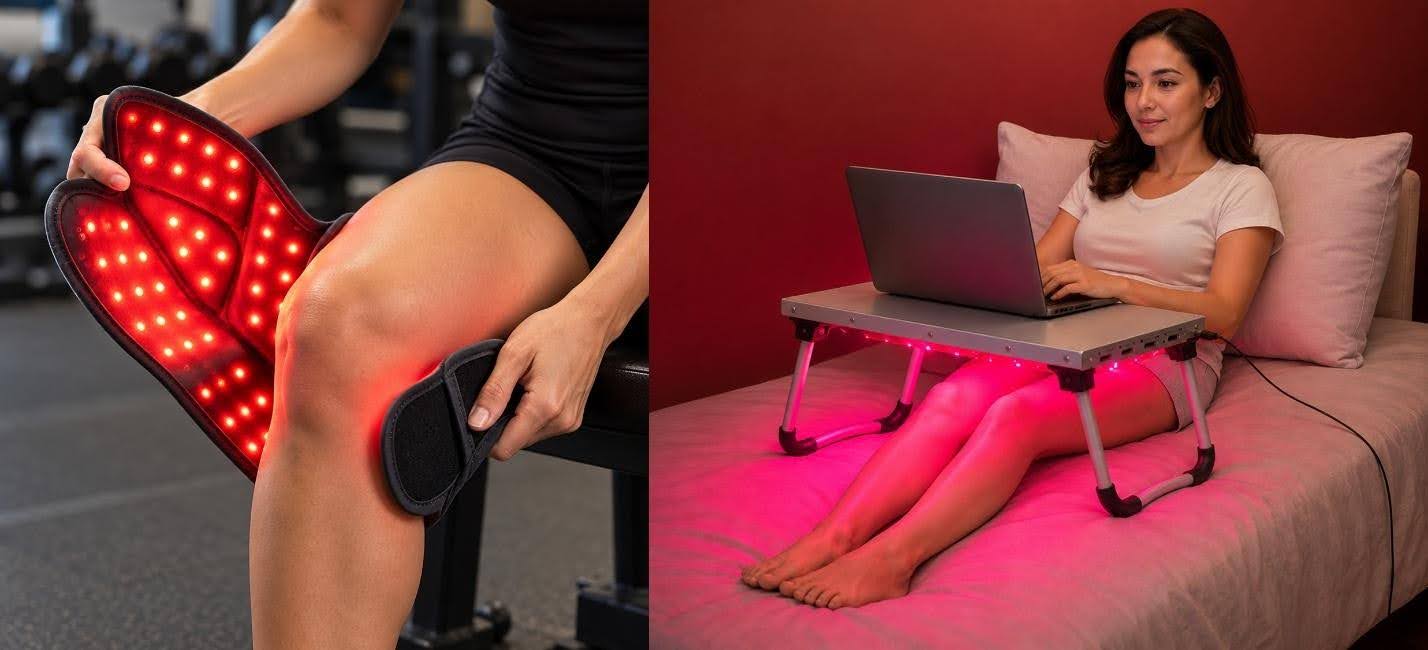
Light therapy devices come in many forms: gloves, belts, wraps, pads, handheld wands, and other body-specific products. Many incorporate sophisticated LED technology, yet their physical designs may fail to accommodate the limitations of the people who need them most.
The issue is not necessarily the light technology itself. It is how that technology is delivered to the human body.
1. When Product Design Overlooks the User
In engineering and product development, user-centered design means understanding the abilities, limitations, and everyday experiences of the intended user.
For people living with arthritis, joint stiffness, or chronic discomfort, these considerations are especially important.
A person with painful finger joints may have difficulty performing tasks that require pinching, gripping, pulling, or twisting. Someone with knee or back pain may struggle to bend, kneel, or reach certain areas of the body.
Yet some wellness products require precisely these movements.
Consider the physical demands of commonly available light therapy devices:
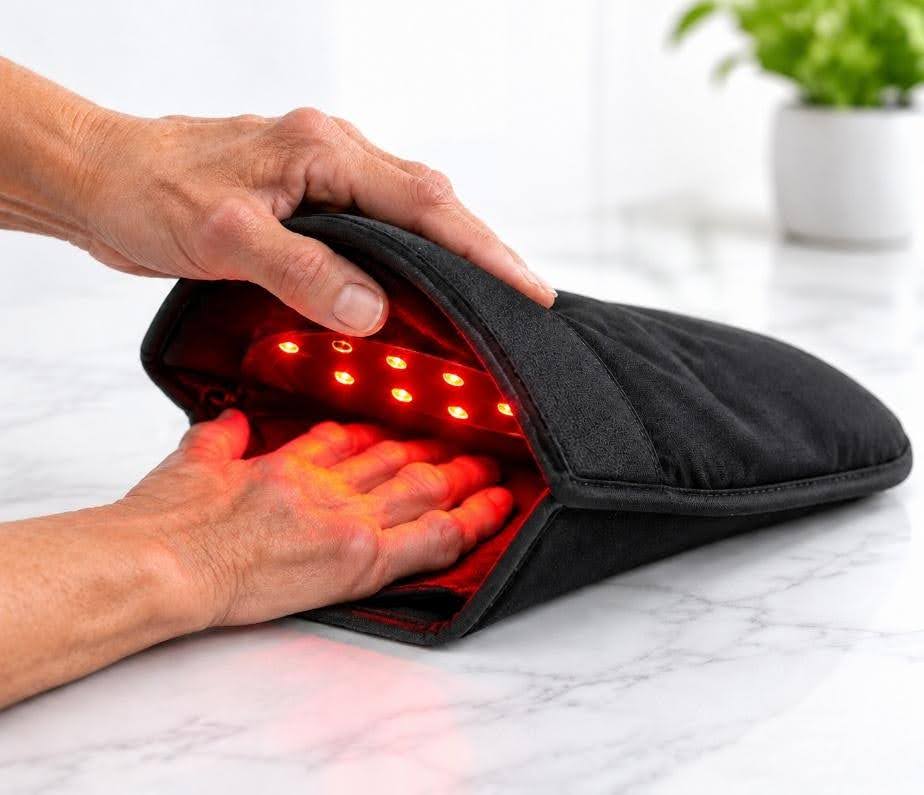
Light therapy gloves. May require finger dexterity to put on, adjust, and remove.
Knee and elbow wraps. Often require bending, reaching, and fastening straps around sensitive joints.
Handheld light devices. Require gripping and holding the device in position throughout a session.
Body pads and belts. May require repeated adjustments to maintain positioning and contact.
These products may work well for many users. But for someone with limited mobility or painful joints, the setup process itself can become a significant obstacle.
A device designed for joint comfort should not demand painful joint movements just to operate it.
This is where inclusive design becomes important.
Inclusive design recognizes that people have different physical capabilities. A well-designed product should accommodate those differences wherever practical, rather than assume that every user has the same strength, flexibility, and dexterity.
2. The Hidden Physical Tax of Wellness Devices
Every wellness routine requires some degree of effort.
But when that effort involves painful movements, awkward positioning, or repeated adjustments, it creates what we might call an ergonomic tax.
This tax is not financial. It is the physical effort required before a person can even begin using a device.
For someone with arthritis, putting on a glove may involve several uncomfortable steps. For someone with knee pain, positioning and fastening a wrap may require bending and twisting. For someone with shoulder discomfort, holding a light therapy wand in place for 15 or 20 minutes may be tiring.
The problem becomes more important when wellness routines are repeated regularly.
A device that is inconvenient once may become frustrating when used day after day.
And when a routine becomes difficult, people may be less inclined to continue it.
This raises an important question for wellness product designers:
Are we designing devices around the treatment technology, or around the people who must use them?
Convenience is not merely a luxury. For people experiencing physical limitations, ease of use can determine whether a wellness routine is practical in everyday life.
3. Active Versus Passive Light Therapy: A Different Design Philosophy
Most conventional wearable and handheld light therapy devices require some degree of active participation.
The user must put something on, strap something around a joint, hold something in place, or adjust the device to reach the intended area.
There is another way to approach light therapy.
Instead of attaching the device to the body, what if the light source could be positioned around the person?
Instead of asking someone to hold a light therapy device, what if the device could support itself?
And instead of requiring a separate product for hands, knees, feet, and other areas, what if one adaptable design could accommodate multiple applications?
This is the thinking behind hands-free, zero-contact light wellness.
With an appropriately positioned light source, users can place their hands, feet, knees, or other body areas beneath the light without wearing or holding the device.
The user can remain seated, reclined, or otherwise comfortably positioned during a session.
This approach changes the relationship between the person and the technology.
The technology adapts to the person, rather than requiring the person to adapt to the technology.
4. Why We Created the VioShield™ Light Wellness Table
At VioShield, we began with a simple observation: light therapy technology has advanced considerably, but the way people interact with many light therapy devices has changed relatively little.
We wanted to rethink the physical delivery of light wellness.
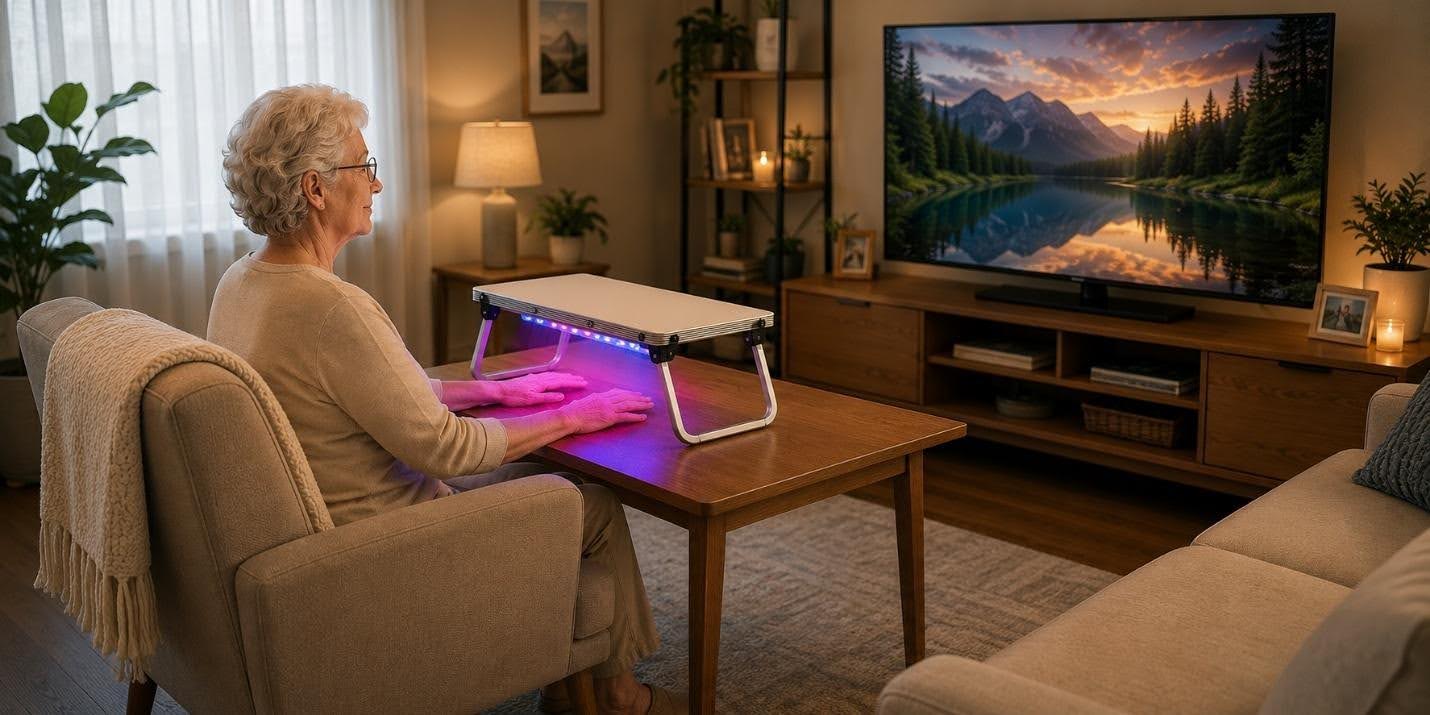
The result is the VioShield™ All-in-One Light Wellness Table, a foldable, hands-free device designed to deliver targeted light without requiring users to wear, hold, or strap a device to their bodies.
Its table-like architecture allows users to position the light above different body areas, including the hands, wrists, feet, knees, and other joints and muscles.
For someone experiencing hand stiffness, both hands can rest comfortably beneath the light without manipulating a tight glove.
For someone with knee discomfort, the table can be positioned over the knees without fastening a wrap around the joint.
And because the table supports itself, users can enjoy a light wellness session while watching television, reading, working on a laptop, or simply relaxing.
VioShield also integrates multiple light wavelengths and automated operating sequences into a single device, reducing the need for separate single-purpose light wellness products.
Our objective is straightforward:
Make light wellness easier to access, more comfortable to use, and simpler to incorporate into everyday life.
5. Better Wellness Technology Begins With Better Ergonomics
The future of home wellness technology should not be measured only by LED wavelengths, power output, treatment modes, or increasingly sophisticated electronics.
Those technical advances matter. But so does the human experience.
Can someone with stiff fingers use the product comfortably?
Can someone with knee pain begin a session without uncomfortable bending?
Can someone with limited mobility reach the intended body area?
Can the technology become part of an ordinary daily routine without demanding additional physical effort?
These questions deserve as much attention as the technology itself.
Wearable and handheld light therapy devices will continue to serve important purposes. But they should not be the only design options available to people experiencing pain or physical limitations.
For many users, hands-free and zero-contact approaches may offer a more comfortable alternative.
A Simple Principle for the Future of Wellness
We believe that good wellness technology should remove unnecessary physical barriers—not introduce new ones.
A person already experiencing pain should not have to struggle with a device intended to help them feel better.
Technology should adapt to the human body. The human body shouldn’t have to struggle to adapt to technology.
That is the design philosophy behind VioShield™: www.vioshieldcare.com.